
Which type did you get on our flyer?

Where shouldwe start automating?Automation Type Check

Pick the type you got from the check on our flyer. For each type, a closer look and a first step you can take on your own.

TYPE 1

The Craftsman's Manualtype

Is know-how sleeping in your company?

Turn what's in your veterans' heads into a company asset. Start by putting the steps into words.

What this type looks like

Veterans with years of experience hold up quoting, scheduling and quality decisions. The work runs smoothly, but the way it is done lives in their heads, not on paper. Every time someone takes a day off or talks about retiring, there is the worry that "nobody knows unless that person is here."

Your first step

  1. 1Pick one job a veteran does — quoting, scheduling or inspection — starting with whatever people ask about most
  2. 2Gather what they base their decisions on: past quotes, drawings, notes. Handwritten is fine
  3. 3Ask "why that price (or that schedule)?" for just ten cases, and write the answers down

Common pitfalls

  • Trying to turn everything into a manual at once and stalling halfway. One job and ten cases is enough to start
  • The veteran tenses up, saying "I can't explain it well." Things go better when the listener is an outsider with no stake, not a colleague

How Neurosynch can help

We come in as an outsider, listen to your veterans, and turn the reasons behind their judgments into words and records. We don't dismiss their know-how — we help you keep it as a company asset.

For quoting, those records feed straight into Manufakt AI Quote. It finds similar past jobs and AI suggests a draft price, so even non-veterans can give quotes with solid reasons behind them.

Manufakt AI Quote

Which know-how should you save first? In the Factory DX Assessment (free), we sum up on one A4 sheet which jobs to record and in what order.

Factory DX Assessment (free)

We visit your factory, look at how work flows and the documents you use, and sum up on one A4 sheet which tasks AI can automate and what you would gain. It costs nothing even if you stop at the assessment (for sites in Aichi).

Apply for a Factory DX Assessment

Hear more at our seminar

AI Automation Seminar for Small Factories — Tue, Jan 19, 2027, 14:00–16:00 — Toyoake Chamber of Commerce Hall, Event Hall (Small)

Register for the seminar

TYPE 2

The Just-Connecttype

Let's make some free time.

Just connect Excel, email and chat. A small cost frees up your hands.

What this type looks like

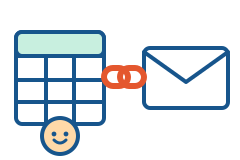
You already have the tools — Excel, email, chat. The trouble is retyping the same information in several places. Because the tools don't talk to each other, nobody's hands are ever free. Without replacing anything big, just connecting them creates time.

Your first step

  1. 1List the tasks where the same information is entered twice or more (e.g. order email → Excel → delivery schedule)
  2. 2For one of them, measure how many there are in a week and how long each one takes
  3. 3Draw one diagram from where the information comes in (email, PDF) to where it finally ends up

Common pitfalls

  • Adding yet another tool, so things end up scattered even more
  • Trying to fix it with rules like "let's agree on file names," which never last

How Neurosynch can help

Without touching the tools and software you use today, Automation with Dedicated Tools handles fixed-procedure work in the background — adding email attachments to a ledger, notifying people when a shared Excel file changes, totaling daily reports or orders into a weekly report. You can start with these small daily chores. Users hardly need to learn anything new, and the steps people should check stay in place. About 10 days from agreeing on the proposal to delivery.

Automation with Dedicated Tools

Where would connecting things free up the most time? In the Factory DX Assessment (free), we show the time saved for each task in numbers.

Factory DX Assessment (free)

We visit your factory, look at how work flows and the documents you use, and sum up on one A4 sheet which tasks AI can automate and what you would gain. It costs nothing even if you stop at the assessment (for sites in Aichi).

Apply for a Factory DX Assessment

Hear more at our seminar

AI Automation Seminar for Small Factories — Tue, Jan 19, 2027, 14:00–16:00 — Toyoake Chamber of Commerce Hall, Event Hall (Small)

Register for the seminar

TYPE 3

The Zero-Retypingtype

Time to stop retyping.

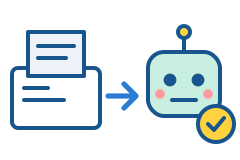
Start with retyping paper and faxes. AI reads them, people just check.

What this type looks like

Orders and invoices arrive by fax, on paper or as PDFs, and someone retypes them while reading. Since someone in-house is comfortable with computers, this type is a good match for AI reading, and the effect shows up in numbers quickly.

Your first step

  1. 1Collect one week of orders (fax and PDF) in one place
  2. 2Time how long each one takes to enter, and work out the total for a month
  3. 3Count what share of the documents are hard to read (handwritten, faded, unusual layouts)

Common pitfalls

  • Stalling because "it's useless unless it reads 100% correctly." It works well enough if people check only what AI can't read
  • Starting without deciding how the read results will be checked and approved

How Neurosynch can help

First we check how much can be read from your actual order forms, and decide with you who checks and approves, in what order. At the center is Manufakt AI Order Entry: it pulls part numbers, quantities and delivery dates from faxed, emailed and PDF orders, and people check only the ones it isn't sure about. Once approved, it can even send the order confirmation automatically.

Manufakt AI Order Entry

How much of your order forms can be read? In the Factory DX Assessment (free), we look at your actual documents and tell you how much time you could save.

Factory DX Assessment (free)

We visit your factory, look at how work flows and the documents you use, and sum up on one A4 sheet which tasks AI can automate and what you would gain. It costs nothing even if you stop at the assessment (for sites in Aichi).

Apply for a Factory DX Assessment

Hear more at our seminar

AI Automation Seminar for Small Factories — Tue, Jan 19, 2027, 14:00–16:00 — Toyoake Chamber of Commerce Hall, Event Hall (Small)

Register for the seminar

TYPE 4

The Leave-It-to-Ustype

Leave it to us and focus on your business.

Experts build and run it. All you do in-house is the final check.

What this type looks like

You know exactly what you want to automate, but nobody in-house has the hands or the time. What you need is a partner who will not only build it, but keep it running and fix it when it stops.

Your first step

  1. 1Name the one office task that takes up the most time
  2. 2Gather the documents and screens used for that task
  3. 3Decide what to hand over (building, running, fixing) and what stays in-house (the final check)

Common pitfalls

  • The system gets built and that's the end of it — when it stops, nobody can fix it
  • It's left to one staff member, and the owner never gets involved

How Neurosynch can help

Instead of bending your work to fit off-the-shelf software, Custom Development builds a system that follows how your work actually flows. We can also fill just the missing pieces with small apps — order management, searching past quotes, a delivery-date board. We visit factories in Aichi, see the floor, then design, build and keep it running. When it stops, we come and fix it. All that stays in-house is the final check.

Custom Development

What should you hand over, and what should stay in-house? In the Factory DX Assessment (free), we propose the way of handing over that fits your company.

Factory DX Assessment (free)

We visit your factory, look at how work flows and the documents you use, and sum up on one A4 sheet which tasks AI can automate and what you would gain. It costs nothing even if you stop at the assessment (for sites in Aichi).

Apply for a Factory DX Assessment

Hear more at our seminar

AI Automation Seminar for Small Factories — Tue, Jan 19, 2027, 14:00–16:00 — Toyoake Chamber of Commerce Hall, Event Hall (Small)

Register for the seminar